Orbis Advisors
CRM System Creation
Role : UX Designer / Developer
Team: 4 members
Tools: Figma, Adobe XD, Microsoft Office, PHP, HTML/CSS/JavaScript
Summary
I worked with Orbis Advisors to design the user experience for a custom CRM system intended to streamline how the business collects client information and manages internal workflows.
The system was built as a team, and needed to support both client-facing forms and internal administrative tools, allowing the business to collect visa application information while helping staff manage client enquiries, appointments, and records in one central platform.
The Problem
Before the CRM system was introduced, the process of collecting and managing client information was fragmented and inefficient. Important client details were often gathered through multiple forms or manual communication, which made it difficult to track records and ensure all required information had been submitted.
The business needed a structured system that could:
Collect detailed client information through a digital form
Allow staff to manage enquiries and client records
Notify administrators when required information was missing
Centralise appointments and reminders
Without a dedicated system, these tasks required significant manual coordination.
Research & Discovery
To understand the system requirements, I worked directly with the stakeholder to identify the workflows the CRM needed to support.
The discovery process focused on understanding two key user groups:
Client Portal Users
Clients needed a simple way to submit their information through an online form connected to the company’s website.
Key requirements included:
A form that collected client details such as name, date of birth, address, contact information, and passport number
Additional questions depending on the type of visa application
The ability for clients to update their information when needed
Notifications when required information had not been submitted
Admin Users
Internal staff required tools to manage client records and coordinate tasks.
Key requirements included:
A searchable client database
The ability to add or modify form questions as requirements changed
A central dashboard to track client enquiries
Appointment scheduling through a shared calendar
Reminders and to-do lists for staff
Notifications when client forms were incomplete
These requirements helped define the core functionality of the system.
Key Insights
From the stakeholder requirements, several design priorities emerged:
The CRM needed to support both external client submissions and internal workflow management
Staff needed fast search functionality to locate client records quickly
Administrators required flexibility to update form questions depending on visa requirements
Notifications were essential to ensure missing information did not delay client processing
These insights shaped the structure of the system interface.
Design Process
User Flow Mapping
We mapped the core workflows for both user groups.
Client workflow:
Website → Client Form → Submit Information → Staff ReviewAdmin workflow:
Login → View Dashboard → Search Client → Review Information → Schedule AppointmentThese flows helped define the key screens needed for the system.
User Journey Summary
To understand the workflow challenges faced by Orbis Advisor’s admin staff, I mapped the end-to-end journey of processing a new client enquiry. Before the CRM, admins relied on manual, paper-based processes — leading to lost information, missed forms, double bookings, and inconsistent follow-ups.
The journey map revealed key frustration points across six stages: receiving enquiries, logging data, updating client profiles, sending forms, scheduling appointments, and managing reminders. These insights directly shaped the CRM’s core features, including a central enquiries hub, unified client profiles, digital form tracking, a shared calendar, and an admin dashboard.
By visualising the admin’s actions, thoughts, and emotions, the journey map helped prioritise the most impactful improvements and ensured the CRM addressed real operational pain points while making the admin experience faster, clearer, and far more organised.
Wireframes
Wireframes were created to explore the layout of the CRM dashboard and client record pages. These early designs focused on:
prioritising important client information
simplifying navigation between records
structuring form inputs clearly
This allowed the team to validate the structure before development began.
Prototyping
Interactive prototypes were developed to test navigation and workflow interactions. These prototypes helped stakeholders visualise how staff would move between searching for clients, reviewing records, and managing appointments.
Final Solution
Client Portal
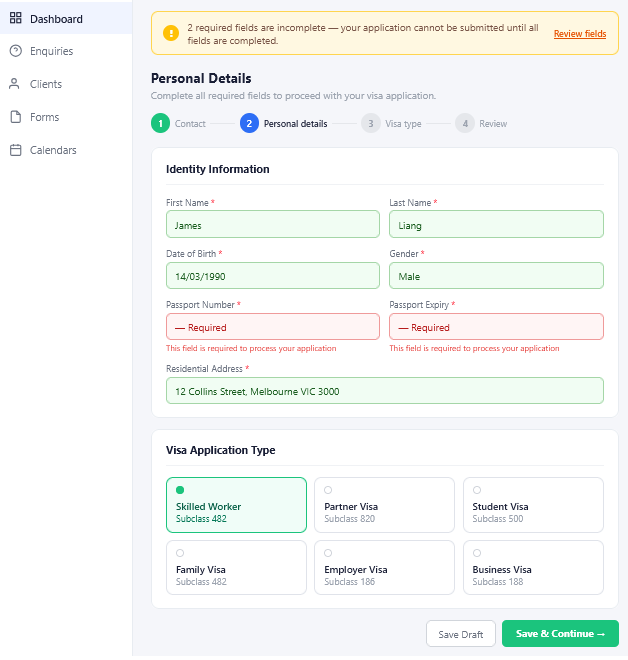
Clients could access a form from the main website and submit their personal details required for visa applications.
The system supported:
collection of personal details
visa-specific questions
alerts when required information was missing
Admin Dashboard
Staff were able to manage all client information through a central dashboard.
Key features included:
searchable client database
ability to update form questions when requirements changed
appointment scheduling through a shared calendar
reminders and task management tools
notifications when forms were incomplete
This system allowed the business to manage client records and enquiries more efficiently.
Results
The CRM was successfully adopted by the Orbis Advisors team for day-to-day operations, replacing their previous workflow entirely. For an internal tooling project, active team adoption is the primary measure of success — the system achieved its core goal of streamlining internal processes and reducing operational friction.
Reflection
This project highlighted the importance of understanding stakeholder workflows when designing internal business systems. By focusing on both client submission processes and internal administrative tasks, the CRM system was able to support the complete lifecycle of managing client information.
Working on this project also strengthened my ability to translate business requirements into structured user flows and interface designs.